A Clinical Psychologist’s Perspective on Postpartum Mental Health, Risk, and the Systems That Are Supposed to Catch a Crisis Before It Becomes a Tragedy
By Mahika Sharma (RCI Registered; Additional Certification in EMDR, IFS Level 1, Trauma Sensitive Yoga foundation)
This article includes 3 parts or perspectives:-
- Part One: What This Case Puts Back on the Table About Postpartum Mental Health
- Part Two: Why This Hits Differently in India
- Part Three: What This Means for Us as Clinicians
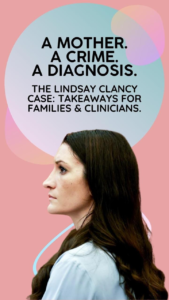
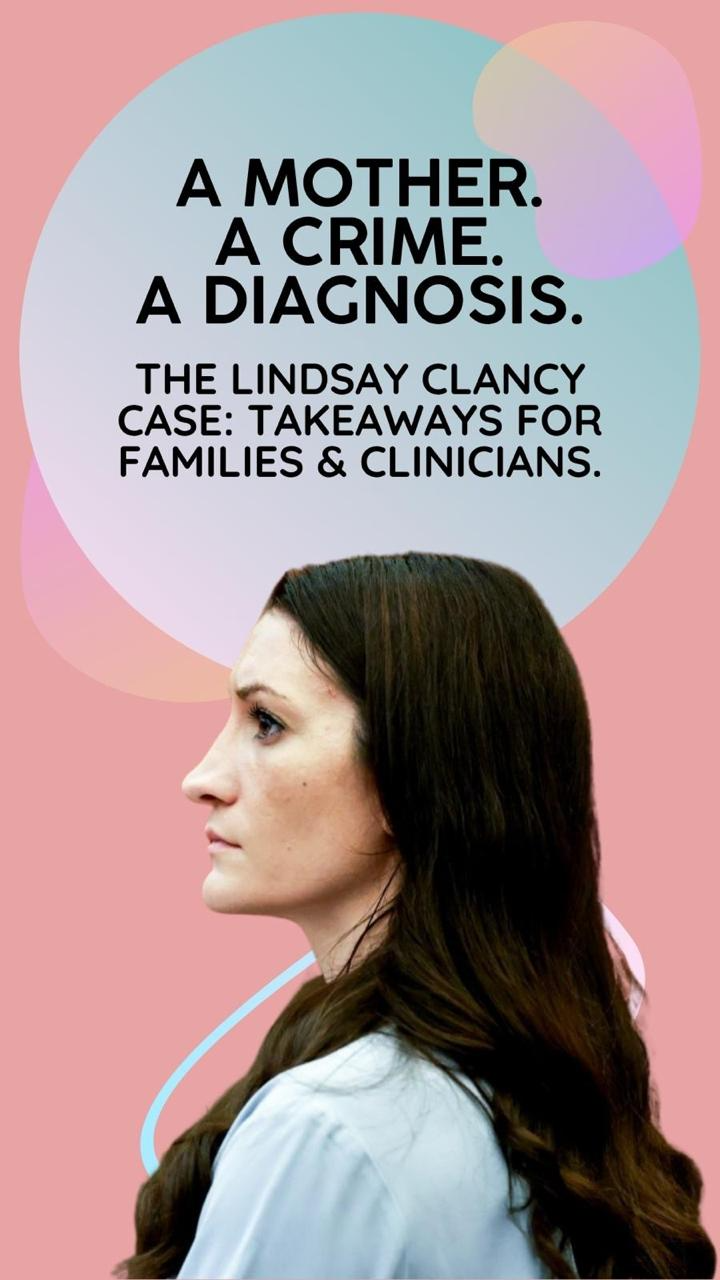
A note before I begin: the trial of Lindsay Clancy — the Massachusetts mother charged in the January 2023 deaths of her three young children, Cora, Dawson, and Callan — is, as of this writing, still with the jury. No verdict has been reached. Her defense has argued she was in the grip of severe postpartum psychosis and unable to appreciate the wrongfulness of her actions; the prosecution has argued the killings were deliberate. I am not going to weigh in on guilt, innocence, or what “really” happened inside that home. That is for the court, working from evidence I don’t have access to.
What I want to write about is what has already surfaced publicly through this case, regardless of its legal outcome — because the clinical questions it has put in front of the public don’t need a verdict to matter. A mother’s reported over-medication and rapid changes to her psychiatric treatment in the weeks before the tragedy. A history of postpartum depression that, by some accounts, was escalating. A family and care team that, from the outside, appear to have been navigating a crisis without a clear net underneath them. Whatever the court decides about intent, the case has already forced a public reckoning with how poorly understood — and how inconsistently monitored — the postpartum period can be, even in a well-resourced healthcare system.
That reckoning is worth having here in India too, where the systems around postpartum mental health are, frankly, thinner.
Part One: What This Case Puts Back on the Table About Postpartum Mental Health
Most people, including many otherwise well-informed families, still think of postpartum mental health as a spectrum that tops out at “baby blues” or, at worst, postpartum depression. Few know that postpartum psychosis exists as a distinct and far more dangerous condition — rare (estimates put it at roughly 1 to 2 per 1,000 births), but a genuine psychiatric emergency. It can involve delusions, hallucinations, extreme confusion, and mood swings that escalate within days, sometimes hours. It is not “bad depression.” It is a break from reality, and it carries a real risk of harm to the mother, and in the most severe and rare cases, to the infant or other children.
A few things clinicians already know, but that bear repeating loudly in public-facing conversation:
- Postpartum psychosis is a medical emergency, not a parenting failure or a character flaw. The framing matters enormously — for how family members respond, how quickly they seek help, and whether the mother herself is believed when she reports what’s happening to her.
- Risk escalates fastest in the first two to four weeks postpartum, but can emerge later, particularly with medication changes, sleep deprivation, or discontinuation of treatment.
- A prior history of bipolar disorder, a previous postpartum psychotic episode, or a family history of postpartum psychosis are the strongest known risk factors — which means psychiatric history-taking during pregnancy isn’t optional, it’s preventive.
- Rapid or unsupervised changes to psychiatric medication in the perinatal period are a recognised risk factor for destabilisation. Any adjustment to mood stabilisers, antipsychotics, or antidepressants in a postpartum patient needs to be made collaboratively, gradually, and with close monitoring — not managed reactively by a single provider without coordination across the care team.
For the public, the takeaway is simple and worth repeating without hedging: if a new mother is expressing paranoid thoughts, disorganised speech, hallucinations, or a sudden and dramatic shift in functioning, that is not something to “wait and watch.” It is same-day psychiatric evaluation territory.
Part Two: Why This Hits Differently in India
In the Indian context, a case like this exposes gaps that are structural, not just clinical.
Screening is inconsistent to non-existent. Postpartum mental health screening is still not a routine, standardised part of obstetric or paediatric follow-up in most Indian hospitals and clinics — public or private. A mother can pass through her six-week postnatal check without anyone asking a single validated question about her mood, sleep, or intrusive thoughts.
Family systems can cut both ways. The joint-family structure that many new mothers in India live within can be protective — extra hands, someone to notice when something is “off.” But it can just as easily suppress disclosure. Symptoms get reframed as ghabrahat (nervousness), spiritual affliction, or simply “adjustment,” especially if naming a psychiatric emergency threatens family reputation or the mother’s standing in the household.
Access to a coordinated perinatal psychiatric team is rare outside a handful of urban centres. Where a mother in crisis in many Western contexts might be routed to a specialised perinatal psychiatry unit, in most of India she is dependent on whichever general psychiatrist, gynaecologist, or GP happens to be reachable — often without any of them talking to each other.
Stigma delays first contact. Postpartum depression is under-recognised in India by both families and, at times, by primary healthcare providers, who may not routinely ask about it. When a condition that’s already under-recognised escalates to psychosis, the lag between symptom onset and someone with the right training seeing the mother can be dangerously long.
None of this excuses any individual failure. But it does mean the margin for error, in India, is thinner — which is exactly why the practice-level lessons from a case like this matter more here, not less.
Part Three: What This Means for Us as Clinicians
This is the part I keep returning to, because whatever the courtroom decides, the practice questions are ones every one of us treating perinatal clients — or any client at elevated risk — should be asking ourselves right now.
1. Documentation is not bureaucracy. It is the record of your clinical reasoning, and it is what protects the client when things move fast. When a case escalates, contemporaneous notes are what let you (and anyone who takes over care) reconstruct exactly what was observed, when, and what was decided and why. Session notes for a postpartum client, or any client flagged as elevated-risk, should capture: mental status at each visit, specific risk indicators present or absent, safety planning discussed, any medication changes and who authorised them, and every instance of coordination (or attempted coordination) with other providers, family, or emergency services. If it isn’t written down, in a system where regulatory oversight is still developing, it effectively didn’t happen — both clinically and, if it ever comes to it, medico-legally.
2. Have an actual protocol for high-risk presentations — not a general sense of “we’d handle it.” This means, in writing, before you need it: what constitutes an escalation trigger, who gets called (psychiatrist, family, emergency services), what the handoff communication looks like, and what happens if the client is non-cooperative or the family minimises the concern. In India, where formal referral pathways to psychiatric emergency services are inconsistent even in metros, the therapist often has to actively build and maintain that referral relationship in advance — not scramble to find it during a crisis.
3. Medication changes in perinatal clients need to be a coordinated decision, not a unilateral one. If you’re not the prescriber, that doesn’t mean medication is outside your scope of concern. Ask. Track what’s being prescribed, tapered, or changed, and flag concerns directly to the prescriber if you notice destabilisation around a change — irritability, disorganisation, sudden calm after agitation, sleep collapsing further. Postpartum clients are often being managed by multiple providers who may never speak to each other unless someone insists on it.
4. Take reported over-medication or destabilisation seriously as a red flag, not a side note. When a client or family member says “something changed after her medication was adjusted,” that is clinical data, not incidental conversation. It needs to go in the notes and needs to shape your next steps.
5. Build psychoeducation into perinatal work as standard practice, not an afterthought. Every postpartum client and, wherever possible, their support system, should leave your care with a working knowledge of the difference between baby blues, postpartum depression, and postpartum psychosis, and a concrete list of red-flag symptoms that warrant an emergency response rather than a next-appointment conversation. In a context where families may not otherwise get this information anywhere else in the care pathway, we may be the only ones who deliver it.
6. Push, individually and collectively, for the regulatory scaffolding that isn’t fully there yet. As RCI and NCAHP frameworks around clinical practice continue to develop in India, high-risk protocol, documentation standards, and inter-professional coordination in perinatal mental health are areas where our field still has real ground to cover. Cases like this one are a hard but useful prompt to advocate for that infrastructure — supervision standards, mandated risk-assessment protocols, and clearer channels between mental health professionals and obstetric care — rather than waiting for policy to catch up on its own.
Closing Thought
Whatever verdict the jury in Massachusetts eventually reaches, the deaths of three children and a mother’s own devastating crisis are, at minimum, a stark reminder of how fast and how catastrophically postpartum mental illness can escalate when it isn’t caught, coordinated, and treated as the emergency it can be. As clinicians — especially in a system still building out its safety nets — the most useful thing we can do with a case like this is not speculate about what happened in one home, but tighten what happens in our own practice: better screening, better documentation, better protocols, and less silence around a condition that is still, even now, widely misunderstood.